Abrasive Blasting Services

Steel blasted to bare metal, to Sa 2½ or Sa 3, before coating.

  • ISO 8501-1 Sa 2½ · Sa 3
  • SSPC-SP 10 · NACE No. 2
  • Blasting since 1999
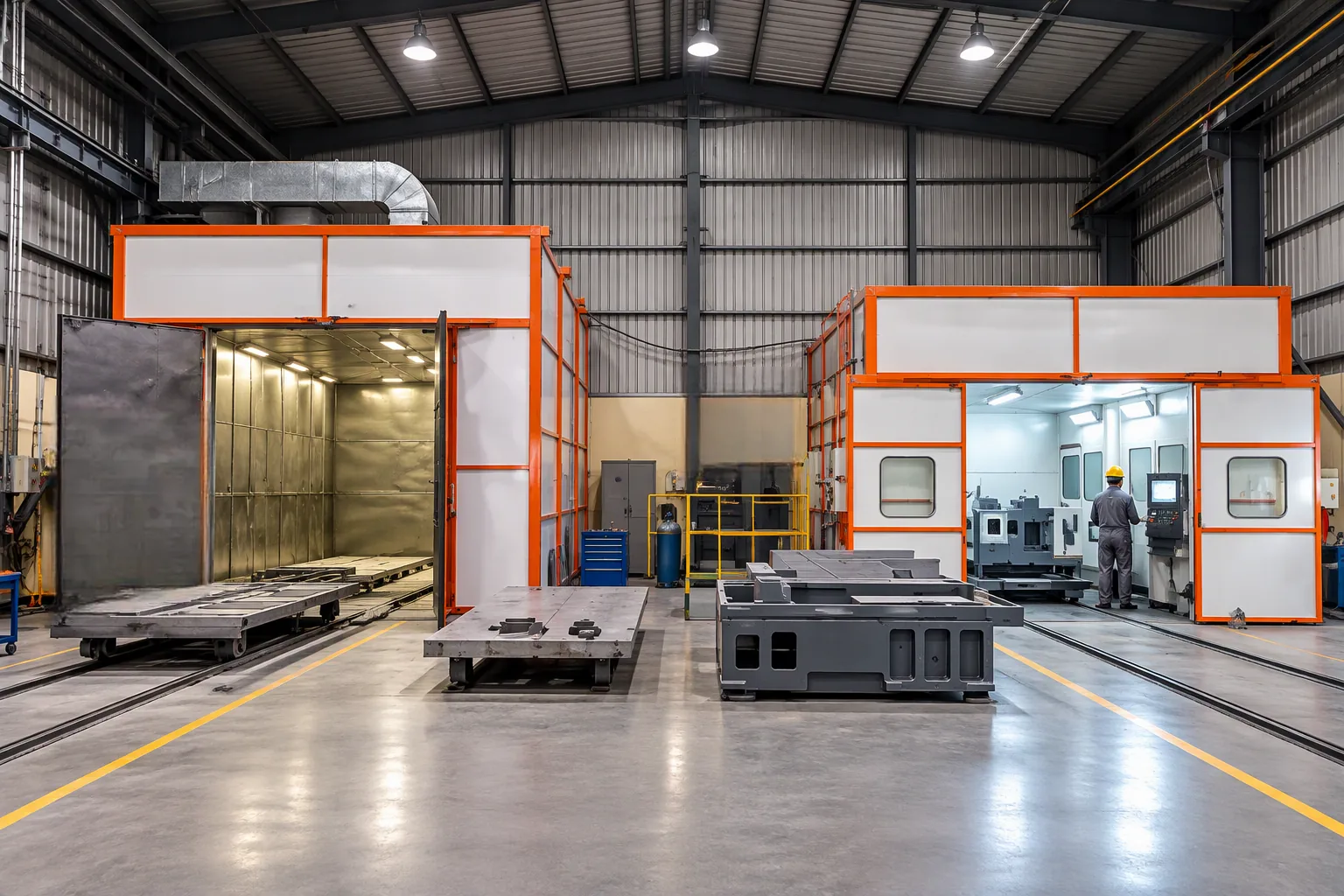
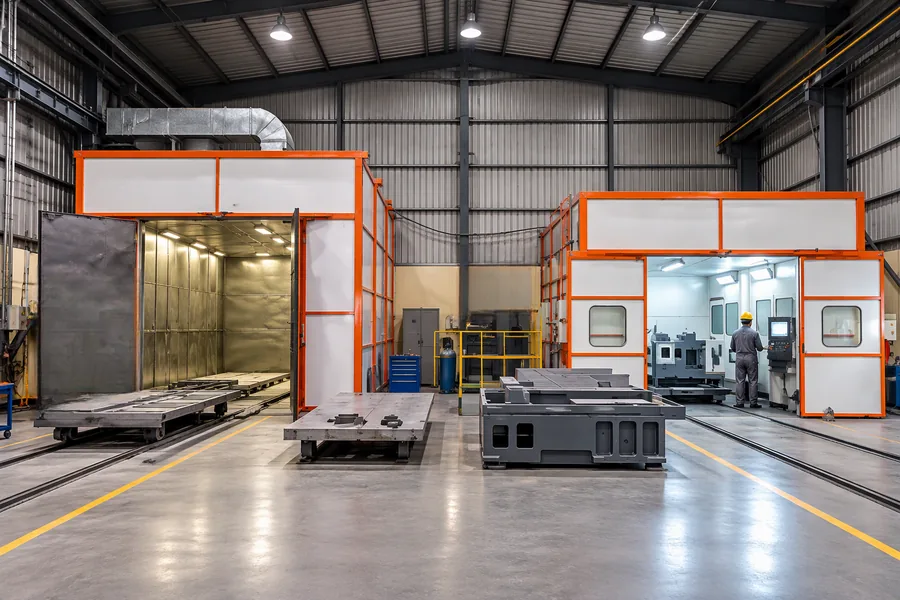
Two enclosed blasting booths with orange frames in a bright factory hall, with a large casting on a rail trolley at the open booth

What Abrasive Blasting Does to Steel

Abrasive blasting drives abrasive against the steel with compressed air. It removes mill scale, rust, old paint, oil and dirt, and roughens the surface into a fine pattern of peaks and valleys into which a coating can lock.

No paint system or metal spray coating can perform better than the surface beneath it. Most early coating failures, from peeling to rust bleeding through, can be traced to steel that was not cleaned to the grade the coating required.

We have blasted steel since the company was established in 1999. Our teams use steel grit, copper slag and aluminium oxide, and select the abrasive according to the steel, its condition and the coating that follows.

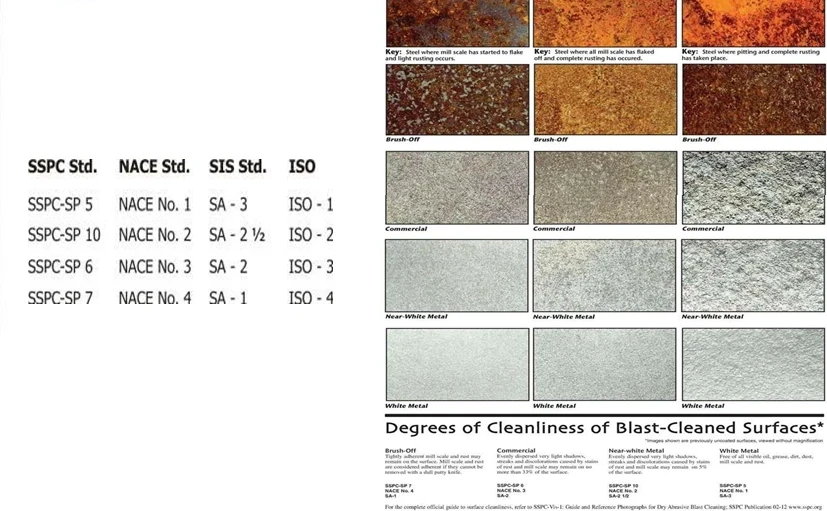
Blast cleanliness reference chart: three starting conditions of rusted steel, each shown blasted to brush-off, commercial, near-white and white metal, beside a table of equivalent SSPC, NACE, SIS and ISO grades
Each column begins from a different steel condition, from flaking mill scale to pitted rust. Each row down represents a cleaner grade, from brush-off (Sa 1) to white metal (Sa 3).

Selecting the Blast Grade

Sa 3: White Metal

SSPC-SP 5 / NACE No. 1. Free of all visible oil, grease, dirt, mill scale and rust. Specified for thermal spray aluminium and for the most aggressive service.

Sa 2½: Near-White Metal

SSPC-SP 10 / NACE No. 2. Only light shadows or streaks remain, on up to 5% of the surface. This is the usual grade before metallizing and high-performance paint systems.

Sa 2: Commercial

SSPC-SP 6 / NACE No. 3. Light stains may remain on up to a third of the surface. Used beneath less demanding paint systems.

Sa 1: Brush-Off

SSPC-SP 7 / NACE No. 4. Loose scale and rust are removed, although tightly adherent mill scale may remain. Used for light maintenance painting.

Specification

The blast grade and profile are taken from your coating specification. Where none is provided, we recommend one suited to the service environment.

Standards
ISO 8501-1 · SIS 05 59 00 · SSPC · NACE
Blast grades
Sa 1 to Sa 3; Sa 2½ is our standard before metallizing
Abrasives
Steel grit, copper slag and aluminium oxide
Method
Compressed-air blasting in booths at our facilities in Bengaluru, or with mobile blasting sets at your site
Steel thickness
From 2 mm upwards
Inspection
Visual comparison with ISO 8501-1 and a surface profile gauge
Records
Blast grade and profile recorded in the project record and test report
Follow-on coating
Metallizing, primer or paint within hours, before flash rust forms

Process Steps

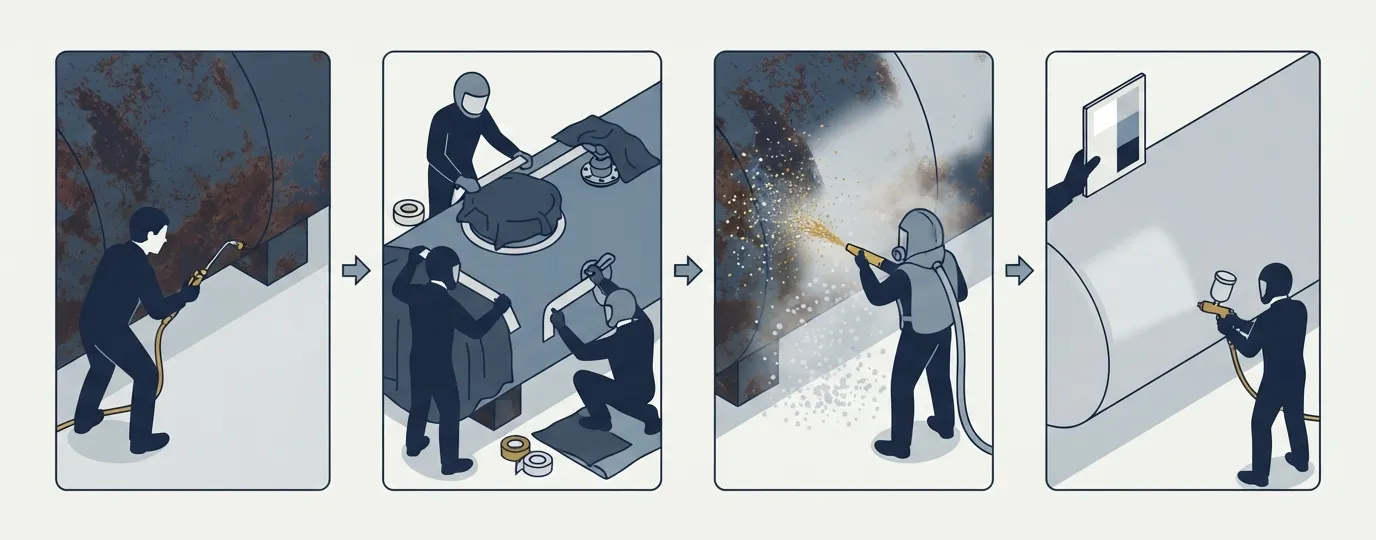
Diagram in four stages: a rusted tank is inspected, openings are masked, the surface is blasted, and the clean steel is checked and primed
Why It MattersA coating lasts only as long as the surface beneath it. Blasting removes rust and mill scale and leaves a profile for the coating to grip. Illustrative diagram.
  1. Inspect

    We record the starting condition of the steel, from grade A (mill scale beginning to flake) to grade C (pitting and complete rusting), and agree the target grade.

  2. Prepare

    Oil and grease are removed, and machined faces, threads and openings that must not be blasted are masked.

  3. Blast

    The steel is blasted in overlapping passes until the entire surface reaches the agreed grade, and is then cleared of dust and spent abrasive.

  4. Check and Coat

    The surface is checked against the ISO 8501-1 reference and the profile is measured. Coating begins the same day, before the steel can rust again.

What We Blast

Abrasive blasting is the first step for almost every steel structure that we coat, across cement, power, steel, chemical, oil and gas, and engineering plants.

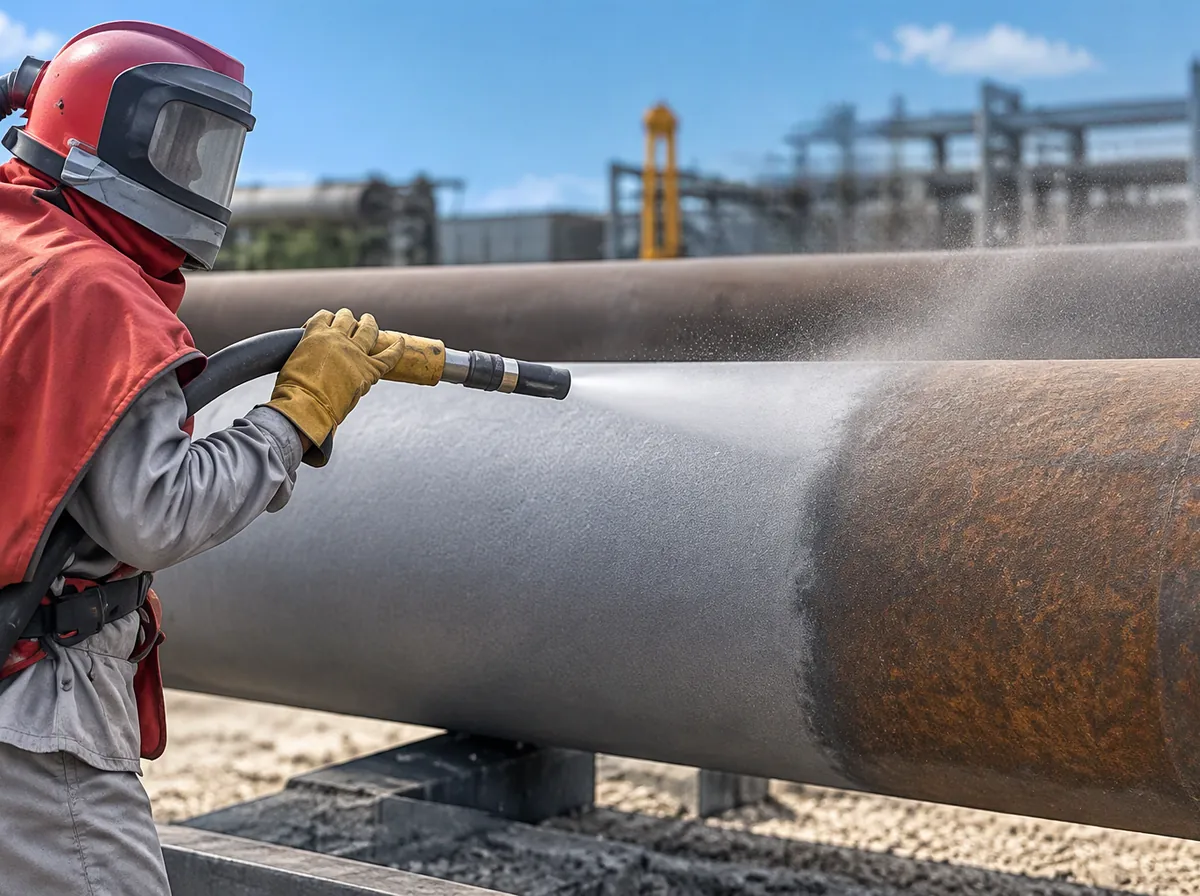
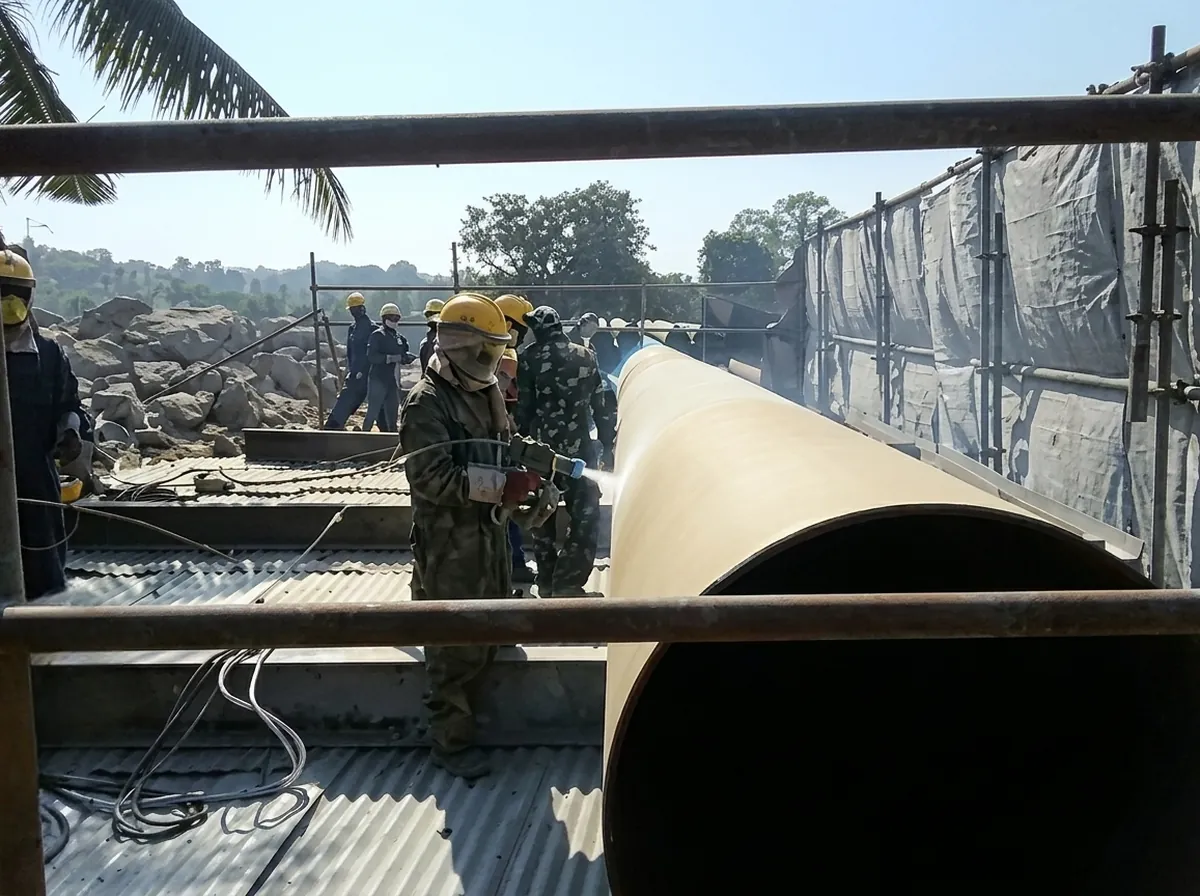
An operator in a blasting hood abrasive blasting a long steel pipe outdoors
  • Structural steel, girders and trusses
  • Chimneys, ducts and kiln shells
  • Storage tanks and pressure vessels
  • Pipes and pipe racks
  • Machine-tool castings and fabricated bases
  • Bridges and towers
  • Statues and temple metalwork

Recent Projects

Murudeshwara Trust

Abrasive blasting and aluminizing · Lord Shiva statue and temple gopuram · 6 months · team of 30

Blasting and thermal spray aluminium were applied to the statue and the gopuram, to protect them from the salt air of the Karnataka coast.
Chettinad Cement Corporation, Ariyalur

Blasting and aluminizing · RABH chimney · team of 15 · 2012

Chettinad recorded that the work was entirely to their satisfaction in terms of speed, quality and workmanship.

Frequently Asked Questions

Do you offer sand blasting?
No. We carry out abrasive blasting with steel grit, copper slag and aluminium oxide, selected according to the steel, the profile required and the coating that follows.
What is Sa 2½?
Sa 2½ is the near-white metal grade in ISO 8501-1, equivalent to SSPC-SP 10 and NACE No. 2. Only faint shadows or streaks may remain, on up to 5% of the surface. It is the standard grade before thermal spray zinc or aluminium and most high-performance paint systems.
How thin a steel can you blast?
We blast steel from 2 mm thickness upwards. Thinner sheet can warp under the blast, so for thin parts we advise on an alternative method of preparation.
Can the blasting be carried out at our site?
Yes. Our teams travel with their own compressors, blast hoppers and hoses, work within your plant permits, and can run shifts so that a shutdown window is used fully.
Will we receive a report?
Yes. The blast grade and surface profile are recorded for every project, together with the coating thickness and adhesion results where we also coat the steel.

Send a Drawing for a Blasting Quote

Share the drawing or photographs, the present condition of the steel and the grade you need, such as Sa 2½. One of our engineers will reply with the method and a quotation.

  • Reply within one working day
  • Drawings kept confidential
  • Email acknowledgement

Enquiry Details

Please enter your name.
Please enter a 10-digit mobile number or a landline number with STD code.
The email address appears incomplete. Please check for a missing @ symbol or domain.
Please select a service, or choose "Not sure, please advise".
Drawing or photographs

Thank you. Your enquiry has been received.

One of our engineers will contact you to discuss the requirement. A confirmation has been sent to your email address.