Flame Spray Coating Services
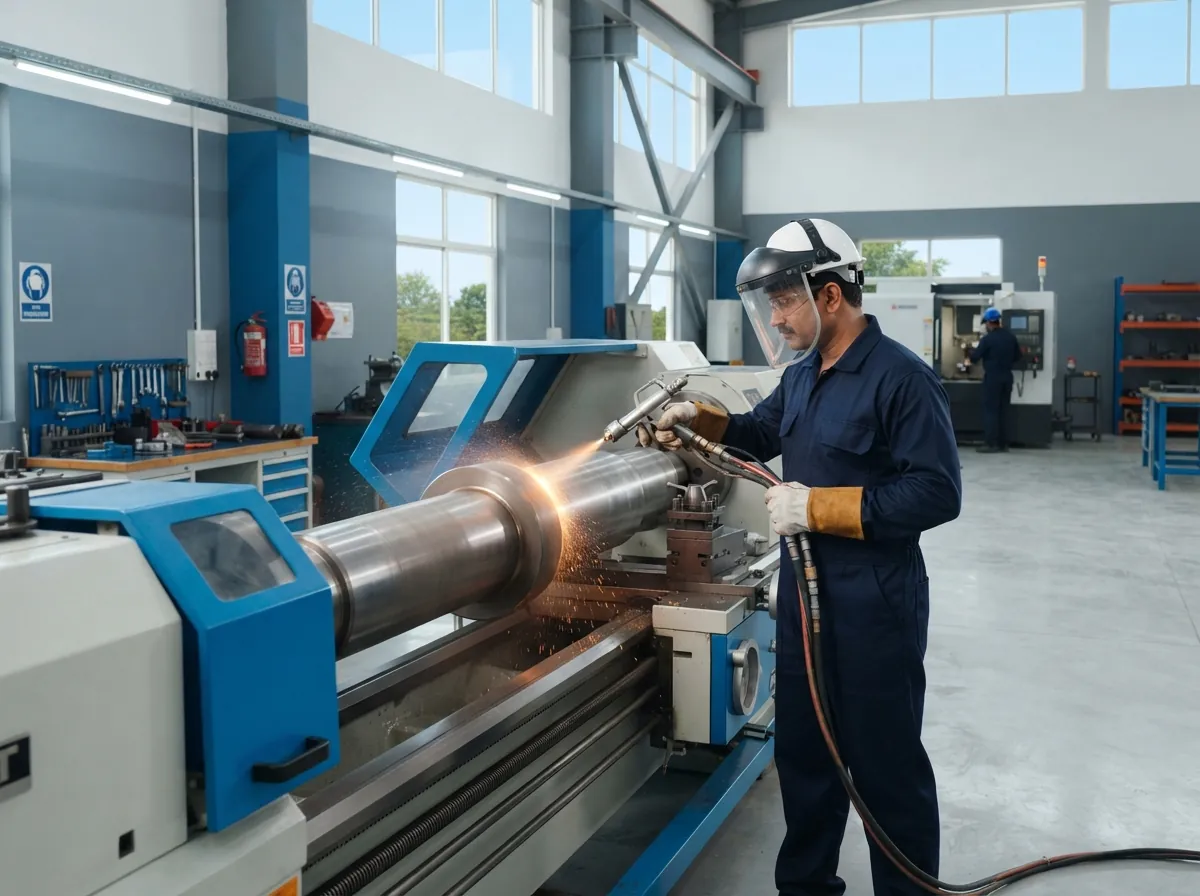
Flame spraying melts wire or powder in an oxy-fuel flame and sprays it onto the part.
- Wire and powder
- Portable for site work
- Zinc, aluminium and alloys
How Flame Spray Works
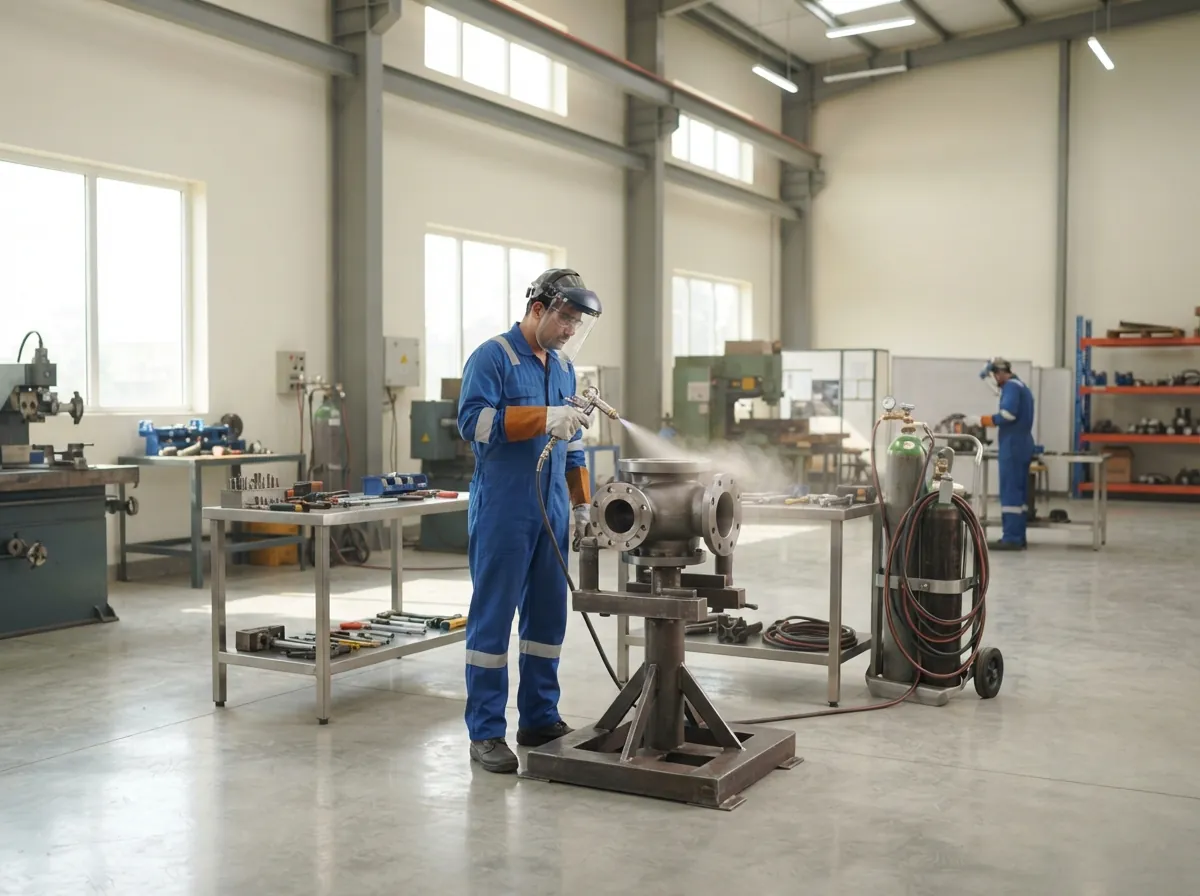
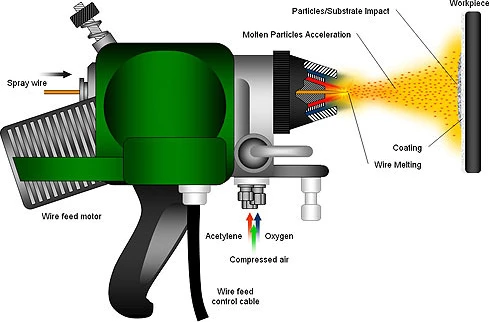
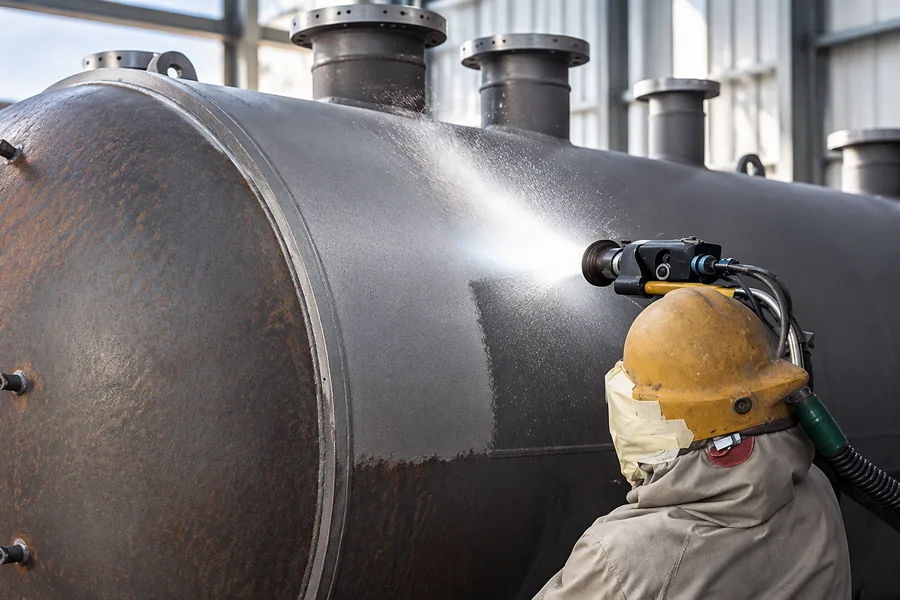
In wire flame spray, metal wire is fed into an oxygen and fuel gas flame, melted at the tip and atomised by compressed air onto the blasted surface. Powder flame spray works in the same way, with powder fed into the flame instead of wire.
Flame spray deposits more slowly than electric arc spray, but it requires no electrical supply at the project and the gun is easy to handle in tight spaces. This suits repair patches, complex shapes and sites without suitable power.
We also flame spray alloy and composite powders for wear resistance and for the reclamation of worn parts.
When Flame Spray Is Appropriate
Repairs and Touch-Up
Damaged areas of a metallized structure can be blasted and resprayed locally.
Remote or Confined Sites
No power source is needed, and the gun is light enough for awkward access.
Smaller and Complex Parts
Valves, fittings and components with recesses that a larger arc gun cannot reach effectively.
Powder Alloys for Wear Resistance
Powder flame spray applies alloys and composites that are not available as wire.
Specification
- Methods
- Wire flame spray and powder flame spray
- Materials
- Zinc, aluminium and alloy wires; metal, alloy and composite powders
- Heat source
- Oxy-fuel gas flame
- Surface preparation
- Grit blast to Sa 2½
- Standards (zinc and aluminium)
- IS 5905 · IS 2590 · BS 2569
- Where
- At our facilities in Bengaluru or at your site
- Testing
- Thickness and adhesion, as for all our metal spray coatings
Our Flame Spray Procedure
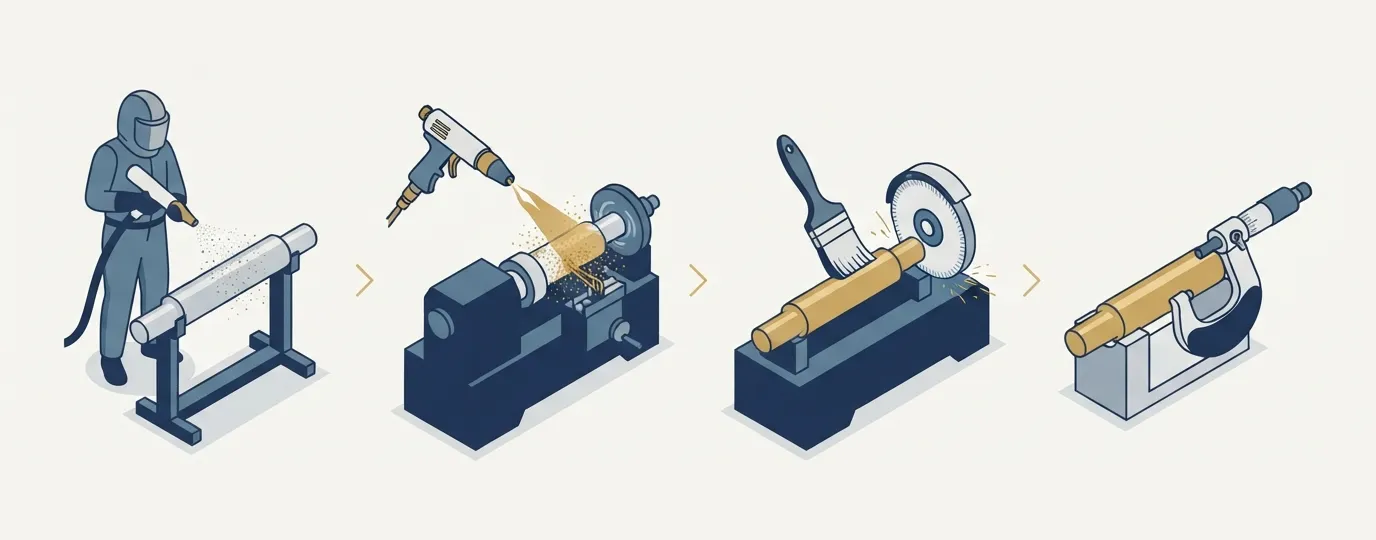
Blast
The area is grit blasted to give the coating a clean profile to which it can adhere.
Preheat and Spray
The part is warmed to drive off moisture and is then sprayed in even passes.
Seal or Finish
Corrosion coatings are sealed. Wear coatings can be left as sprayed or finished to size.
Test
Thickness and adhesion are checked and recorded.
Applications
Flame spray complements our arc spray work: it handles the repairs, details and components for which arc spray is too large.
- Repairs to metallized structures
- Valves, pumps and fittings
- Pipe joints and site welds
- Worn shafts and journals
- Small batches of components
Frequently Asked Questions
When is flame spray preferred to arc spray?
Can flame spray repair damaged metallizing?
Can zinc be flame sprayed?
Send a Drawing for a Metallizing Quote
Share the drawing, the coating you need (zinc or aluminium, and the thickness) and where the steel is. One of our engineers will reply with the method and a quotation.
- Reply within one working day
- Drawings kept confidential
- Email acknowledgement
Thank you. Your enquiry has been received.
One of our engineers will contact you to discuss the requirement. A confirmation has been sent to your email address.