Copper Slag Blasting Services
Copper slag blasting of large structures, at our yards or on site.
- For large surface areas
- Bengaluru facilities or your site
- Sa 2½ before coating
Why Copper Slag Suits Large Structures
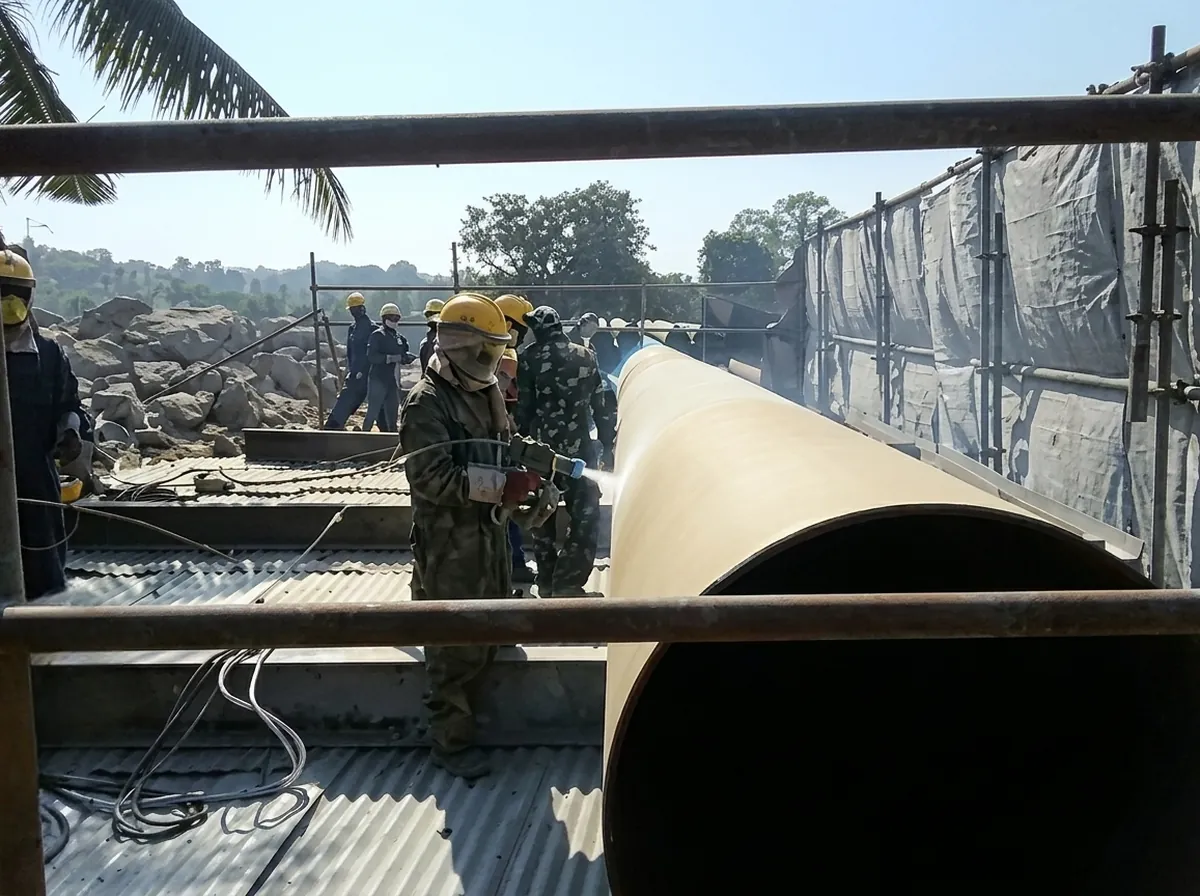
Copper slag is a by-product of copper smelting, crushed and graded into a hard, glassy, angular abrasive. It cuts quickly through rust, mill scale and old coatings, and leaves a sharp profile that suits both paint and thermal spray.
It is practical for open-air blasting of large surface areas, and it is low in free silica, which makes it a safer choice for blasters than river sand.
Our teams travel with their own compressors, blast hoppers and hoses, so that blasting can begin as soon as access and permits are in place.
When Copper Slag Is Appropriate
Structures That Cannot Be Moved
Tanks, chimneys, bridges and plant steelwork are blasted where they stand.
Large Surface Areas
Fast cutting maintains progress across thousands of square metres of steel.
Heavy Rust and Old Coatings
Failed paint systems and pitted rust are stripped back to bare steel.
Before Metallizing on Site
Provides the angular profile that thermal spray zinc and aluminium require.
Specification
- Abrasive
- Graded copper slag; steel grit and aluminium oxide as the project requires
- Cleanliness
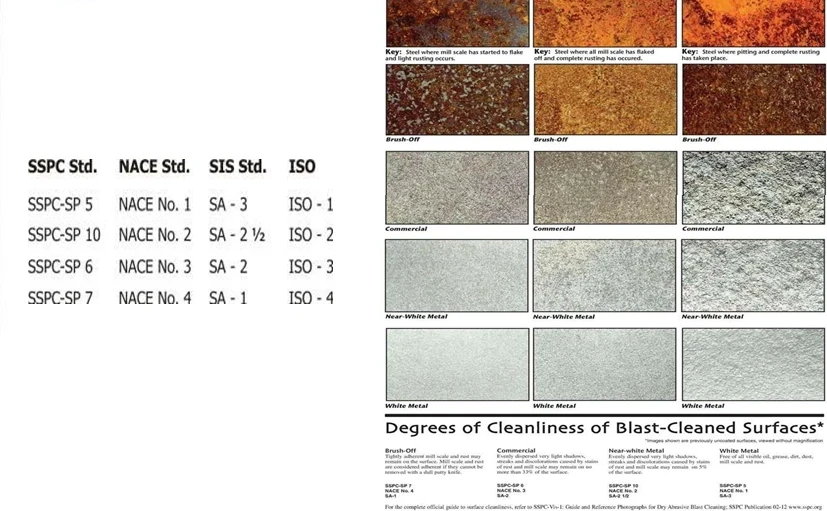
- ISO 8501-1 Sa 2½, or as specified
- Profile
- Sharp and angular
- Where
- At our facilities in Bengaluru or at your site
- Site equipment
- 15 air compressors, 15 blast hopper and hose sets, 6 air receivers
- Inspection
- Visual comparison with ISO 8501-1 and a surface profile gauge
Process Steps
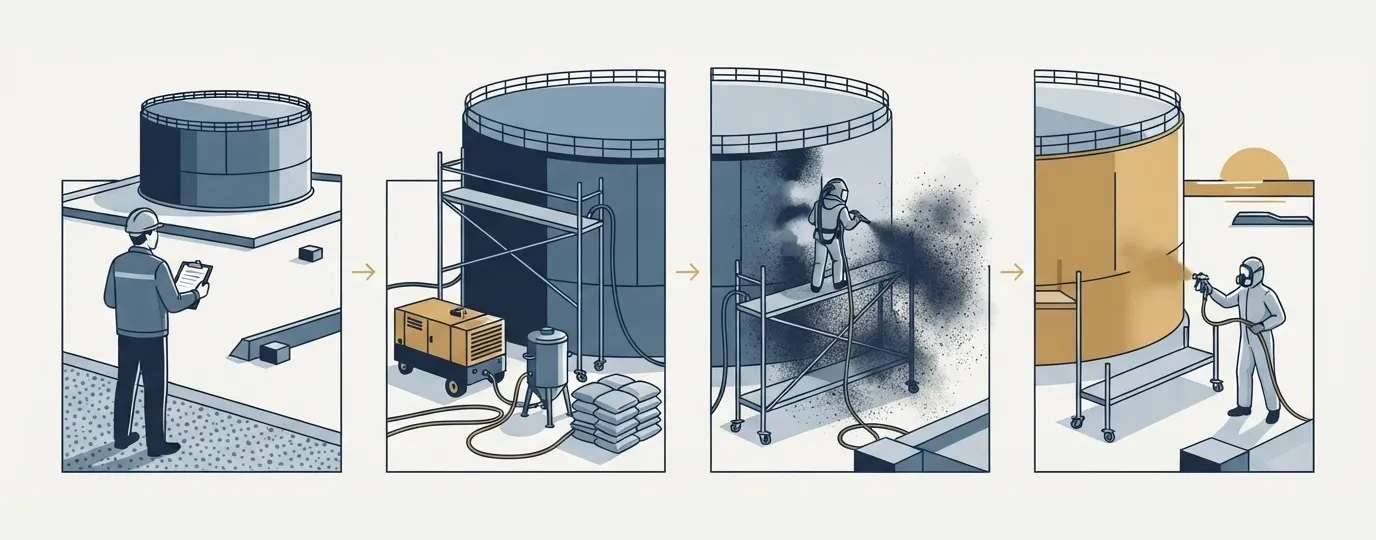
Survey and Plan
We assess access, the area to be blasted and your shutdown window, and plan the crew, equipment and sequence of work.
Set Up
Compressors, hoppers and hoses are positioned, and nearby equipment is protected from abrasive and dust.
Blast
The structure is blasted section by section to the agreed grade.
Coat in the Same Shift
Each blasted section is metal sprayed or primed before it can rust, so that blasting and coating progress together.
Applications
Copper slag blasting is the method by which we prepare most large structures for coating at cement, power, refinery and chemical plants.
- Storage tanks, including crude oil tanks
- Chimneys and stacks
- Cement plant preheaters, ducts and kiln shells
- Bridges and girders
- Pipelines and pipe racks
- Ship and port structures
Frequently Asked Questions
Should copper slag or sand be used?
Can you work while our plant is running?
How quickly can you begin?
Send a Drawing for a Blasting Quote
Share the drawing or photographs, the present condition of the steel and the grade you need, such as Sa 2½. One of our engineers will reply with the method and a quotation.
- Reply within one working day
- Drawings kept confidential
- Email acknowledgement
Thank you. Your enquiry has been received.
One of our engineers will contact you to discuss the requirement. A confirmation has been sent to your email address.